kEEP THAT TEXAS HEAT WHERE IT BELONGS
Your attic insulation works quietly above your head. But when it becomes thin, uneven, damaged, or contaminated, your home may start making plenty of noise about it—through uncomfortable rooms, longer cooling cycles, and rising energy bills.
Dulock Ducts provides residential attic insulation services in Waco, TX, and communities throughout Central Texas and the Dallas–Fort Worth area. We install blown-in attic insulation, remove old or damaged material, and complete full insulation replacements.
Before recommending a mountain of new insulation, we evaluate what is already there and consider the attic’s coverage, visible air leakage, ventilation, moisture, and accessible ductwork conditions.
If it affects airflow, ventilation, or home comfort, Dulock Ducts is the company to call.
WHAT IS BLOWN-IN ATTIC INSULATION?
Blown-in insulation—also called loose-fill insulation—is installed using specialized equipment that distributes insulation material across the attic floor.
Because the material consists of small, loose fibers, it can fill around framing, wiring, pipes, and other irregular spaces that may be difficult to cover evenly with insulation batts.
Blown-in attic insulation may be used to:
- Insulate a previously unfinished attic
- Add coverage over existing insulation
- Fill thin or uneven areas
- Upgrade a home toward an appropriate R-value
- Improve the attic’s resistance to heat transfer
Adding more insulation is not automatically the right answer. Wet, contaminated, heavily damaged, or improperly installed material may need to be removed before new insulation is added.
A professional attic evaluation helps determine whether your home needs an insulation addition, targeted correction, or complete replacement.
Signs Your Attic Needs More Insulation
Your attic insulation will not send you a warning message, but your home may provide a few clues. Consider scheduling an evaluation if you notice:
- Heating or cooling bills increasing without a clear explanation
- Large temperature differences between rooms
- Insulation that looks thin, uneven, compressed, or disturbed
- Ceiling joists that remain visible above the insulation
- An unknown insulation history after purchasing a home
These signs do not always mean insulation is the only problem. Comfort and energy concerns can also be affected by air leakage, damaged ductwork, HVAC equipment, windows, moisture, ventilation, and other parts of the building envelope.
Dulock Ducts evaluates the visible attic conditions and provides recommendations based on what your home actually needs.
How Attic Insulation Helps Control Heat Transfer
In hot climates, unconditioned attic spaces can reach approximately 120 to 140 degrees during the summer. Insulation creates resistance between those extreme attic temperatures and the conditioned rooms below.
Improve Indoor Comfort
Consistent insulation coverage helps reduce heat transfer through the ceiling, supporting more comfortable indoor temperatures during summer and winter.
Support Energy Efficiency
When a home gains or loses less heat through the attic, its heating and cooling system may require less energy to maintain the desired temperature.
Reduce Unnecessary HVAC Demand
Insulation cannot repair or replace an HVAC system, but it can help reduce one source of heating and cooling demand.
Address Thin or Uneven Coverage
Low, compressed, or disturbed insulation can leave sections of the ceiling with less thermal resistance than surrounding areas.
Support More Consistent Temperatures
Proper attic insulation may help reduce uncomfortable hot and cold spots caused by heat moving through poorly insulated ceilings.
Strengthen the Home’s Thermal Boundary
Insulation is an important part of the boundary separating conditioned living spaces from the unconditioned attic.
ENERGY STAR estimates that homeowners can save an average of 15% on heating and cooling costs by combining air sealing with added insulation in attics and other accessible areas. Actual savings vary based on the home’s current condition, climate, energy use, and improvements performed.
OUR ATTIC INSULATION PROCESS
WE EVALUATE THE ATTIC
We examine accessible areas of the attic and ask about temperature differences, energy concerns, maintenance history, leaks, pests, and other conditions you have noticed.
WE CHECK THE EXISTING INSULATION
Our team evaluates visible insulation depth, coverage, condition, and areas that appear thin, damaged, compressed, or contaminated.
WE EXPLAIN YOUR OPTIONS
Based on the findings, we discuss whether the attic may benefit from additional insulation, removal, replacement, or another issue being addressed first.
WE PREPARE THE SPACE
If removal is needed, the old material is collected and removed using professional equipment. The attic is prepared for the approved installation plan.
WE INSTALL THE INSULATION
New blown-in insulation is distributed across the designated attic areas to achieve even coverage and the planned installed depth.
WE COMPLETE A FINAL REVIEW
After installation, we review the completed work and answer your questions. You will know what was installed, why it was recommended, and what to expect next.
ATTIC INSULATION INSTALLATION AND REMOVAL
These services address different attic conditions. Dulock Ducts evaluates the attic before recommending removal or replacement. If the existing material is still suitable and only needs additional coverage, we will explain that option.
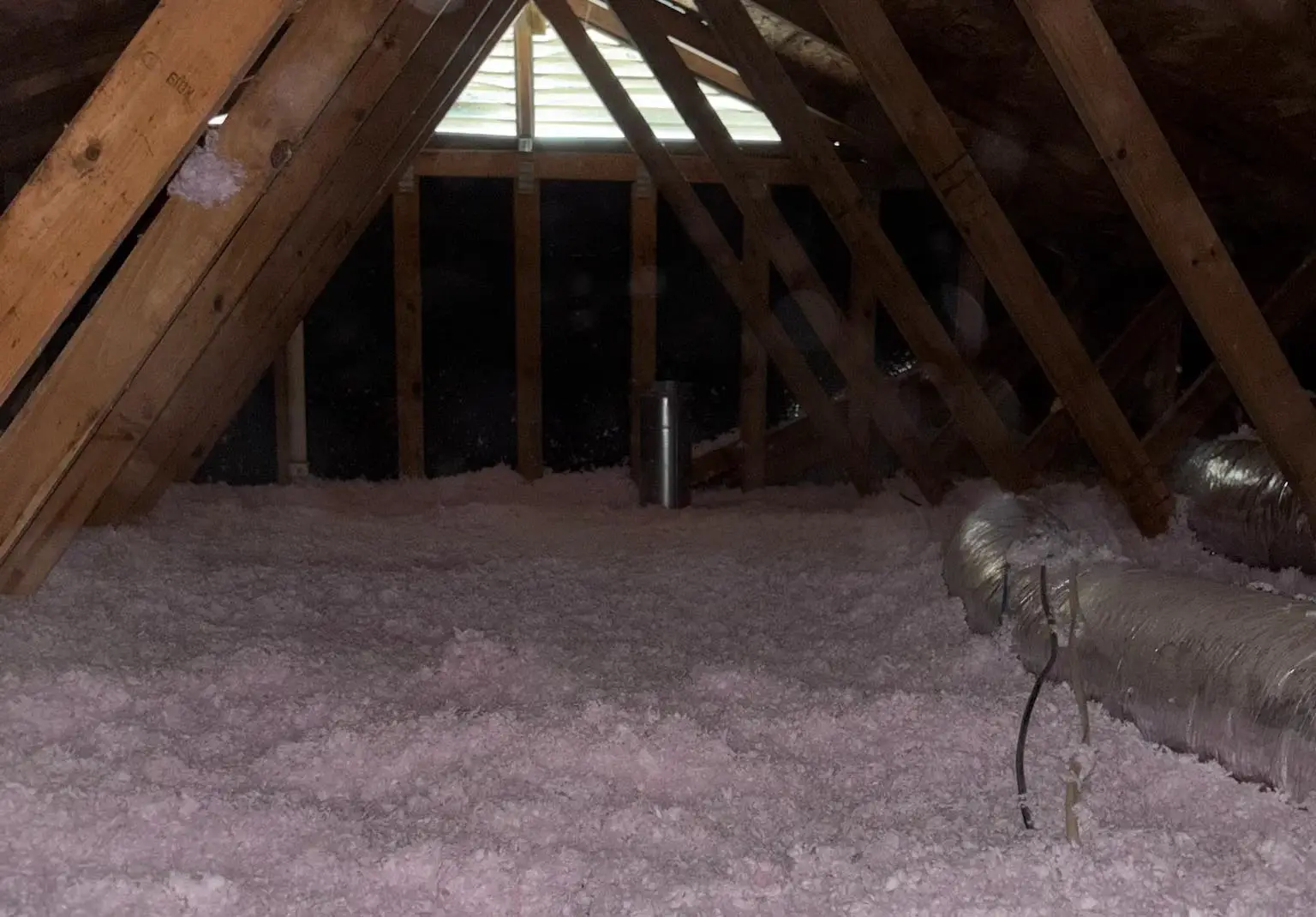
Attic Insulation Installation
Blown-in insulation can be installed in an unfinished attic or added over suitable existing insulation to increase coverage and thermal resistance.
Attic Insulation Removal
Insulation may need to be removed when its condition makes adding more material inappropriate. Sources of water, pests, smoke, or other contamination should be corrected before new insulation is installed.
What R-Value Does a Central Texas Attic Need?
Insulation levels are measured by R-value, which represents resistance to heat flow. In general, a higher R-value provides greater thermal resistance.
Attic insulation recommendations for Texas homes may fall within a broad range such as R-30 to R-60. However, there is no single correct number for every property.
ENERGY STAR identifies R-38 as a common recommended level for many attics, while some homes and climates may benefit from a different target.
Dulock Ducts evaluates the existing conditions before recommending an insulation level. We do not choose a target simply because it produces the biggest number on a proposal.
Why Choose Dulock Ducts for Attic Insulation?
Plenty of companies can operate an insulation blower. Dulock Ducts looks at how the attic affects the rest of your home.
A WHOLE-HOME PERSPECTIVE
We understand how attic insulation, visible ductwork, airflow, ventilation, and moisture conditions can work together.
EVALUATION BEFORE INSTALLATION
We inspect the accessible attic conditions before recommending an addition, removal, or complete replacement.
COMPLETE INSULATION SOLUTIONS
Dulock Ducts provides residential attic insulation installation, removal, and replacement, allowing us to recommend the service that fits the condition.
STRAIGHTFORWARD RECOMMENDATIONS
We explain what we found, what we recommend, and why. If suitable insulation can remain in place, we will not recommend removing it simply to make the project larger.
RESPECT FOR YOUR HOME
Our team works carefully around attic access points and surrounding living spaces, protects the work area, and keeps you informed throughout the project.
LOCALLY OWNED IN WACO
Dulock Ducts is based in Waco and understands the heat, humidity, long cooling seasons, and home-comfort challenges experienced throughout Central Texas.
Attic Insulation Service Areas in Central Texas & DFW
Based in Waco, Dulock Ducts provides residential attic insulation services throughout Central Texas and select Dallas–Fort Worth communities.
Waco and McLennan County Area:
- Waco
- Hewitt
- Woodway
- Robinson
- Lorena
- McGregor
- China Spring
Temple and Killeen Area:
- Temple
- Belton
- Killeen
- Copperas Cove
- Harker Heights
Dallas–Fort Worth Area:
- Dallas
- Fort Worth
- Arlington
- Irving
- Grand Prairie
- Mansfield
- Burleson
- Weatherford
Attic Insulation FAQS
How do I know whether to add insulation or replace it?
The answer depends on the condition of the material already in the attic.
Existing insulation may be suitable to remain when it is dry, clean, evenly distributed, and compatible with the planned upgrade. Additional blown-in insulation can then be installed to increase coverage and R-value.
Removal or replacement may be more appropriate when insulation is wet, contaminated, heavily disturbed, smoke-damaged, compressed, or affected by unresolved pest activity.
Dulock Ducts evaluates the existing material before recommending an addition, removal, or replacement.
Will new attic insulation lower my electric bill?
Properly installed attic insulation can reduce heat transfer and support lower heating and cooling demand. However, the amount saved depends on the home’s existing insulation, air leakage, ductwork, HVAC equipment, thermostat settings, weather, and household energy use.
ENERGY STAR’s average savings estimate applies to air sealing combined with added insulation—not insulation alone. Dulock Ducts does not promise a particular percentage or dollar amount.
The most immediate improvement many homeowners notice is more consistent indoor comfort, but results vary by property.
How long does attic insulation last?
Many insulation materials can remain effective for decades when they stay dry, clean, properly installed, and undisturbed.
Insulation may require attention sooner when it becomes wet, contaminated, compressed, displaced, or damaged by pests, renovations, foot traffic, or other attic work.
Age alone does not determine whether insulation needs replacement. Its current condition, coverage, and performance are more useful indicators.
What happens during a free attic evaluation?
Dulock Ducts examines accessible portions of the attic and evaluates the visible insulation depth, coverage, and condition.
We also look for observable concerns such as:
- Thin or bare areas
- Water staining or damaged material
- Evidence of pests
- Disturbed or compressed insulation
- Accessible ductwork concerns
- Visible airflow or ventilation issues
After the evaluation, we explain what we found and discuss whether installation, removal, replacement, or another corrective step may be appropriate.